
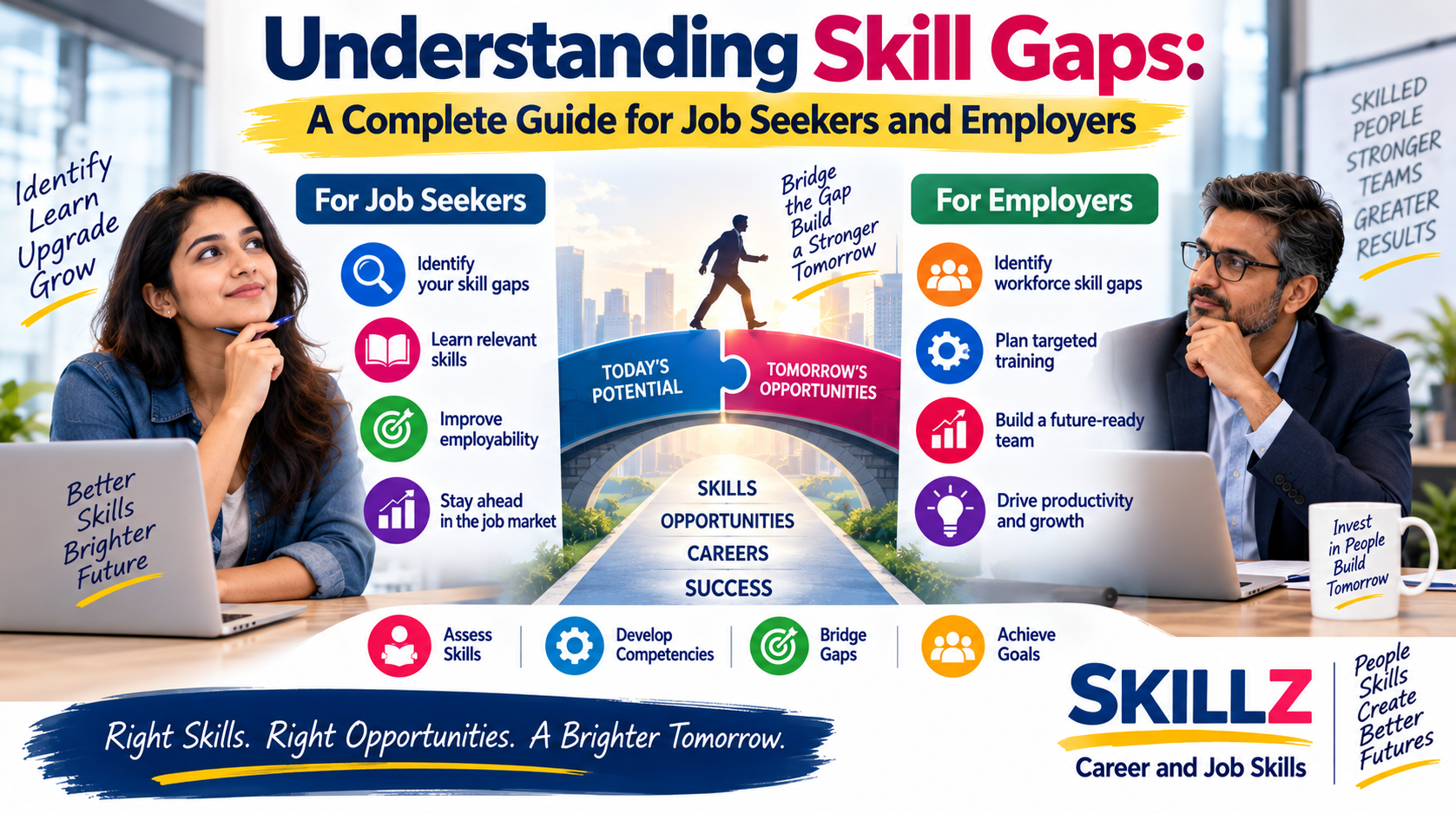
Is your career stalling? You're not alone
Every job seeker dreams of landing the right role and growing steadily in their career. But what happens when a capable, intelligent professional keeps struggling in interviews, on the job, or with promotions, despite putting in the effort?
The frustration can be overwhelming for both individuals and the managers trying to support them. If this sounds familiar, you or your employee may have a specific skill gap. The good news: a skill gap doesn't mean someone can't succeed. It just means they need to build that skill differently.
What exactly is a skill gap?
A skill gap is the difference between the skills a role requires and the skills a person currently has. It's like having a strong engine but missing a key part that keeps the whole system running smoothly.
Key things to understand
Intelligence is not the issue
Most people with skill gaps have strong potential and capability.
It's not laziness
These are real, learnable gaps, not a lack of effort.
It's more common than you think
Global studies consistently show that a majority of employers report skill gaps in new hires.
Early identification matters
The sooner a skill gap is identified, the faster it can be closed.
Common signs of a skill gap
Skill gaps tend to show up in patterns. Look for the same difficulty repeating across interviews, projects, and reviews.
Interview challenges
- Difficulty structuring clear, concise answers
- Struggling to explain past achievements with impact
- Freezing under pressure or unexpected questions
- Getting interviews but rarely receiving offers
Workplace difficulties
- Missed deadlines despite putting in long hours
- Difficulty prioritising tasks and projects
- Struggle to communicate progress clearly to managers
Technical gaps
- Difficulty learning new software or tools quickly
- Avoiding tasks that involve unfamiliar systems
- Relying heavily on colleagues for basic digital tasks
Communication issues
- Misinterpreting instructions from managers
- Difficulty following multi-step project briefs
- Problems expressing ideas clearly in writing or speech
Behavioural and professional indicators
- Short attention span or easily distracted during meetings
- Difficulty organising tasks and managing time
- Discomfort with public speaking or presentations
- Low confidence and frustration with feedback
- Performance reviews that consistently mention "needs improvement" in the same area
Types of common skill gaps
Communication gap Most common
Affects interviews, presentations, and daily collaboration. Look for trouble with:
- Structuring clear messages
- Active listening
- Written communication and email etiquette
Digital and technical gap
Difficulty with the tools, platforms, or technical concepts a role requires:
- Software proficiency
- Data literacy
- Adapting to new systems
Time management gap
Affects the ability to plan and execute work on schedule, causing:
- Missed deadlines
- Poor prioritisation
- Last-minute, high-stress work
Leadership and influence gap
Difficulty guiding others or influencing decisions, which impacts:
- Team management
- Cross-functional collaboration
- Stakeholder buy-in
Analytical and problem-solving gap
Problems interpreting data or approaching complex issues, leading to:
- Difficulty making data-informed decisions
- Trouble troubleshooting independently
- Over-reliance on step-by-step instructions
Adaptability gap
Not a technical skill on its own, but it often co-occurs with other gaps and affects:
- Handling change and ambiguity
- Resilience under pressure
- Openness to new processes
How SKILLZ can help: comprehensive solutions for career success
Every professional's career journey is unique. Our approach combines expert skills assessment, personalised development strategies, and ongoing support to help job seekers and employees reach their full potential. It rests on three pillars.
Professional assessment and diagnosis
Thorough skills testing to identify specific gaps, review past feedback and interview outcomes, map your unique skills profile, and set a baseline for tracking progress.
Individualised development and support
Targeted skill-building modules, practical tools, coaching that fits your learning style, and time management and interview-anxiety support.
Holistic support services
Skill gaps affect more than performance metrics, so we also support confidence, communication, networking, and manager and mentor collaboration.
What our assessment includes
- Aptitude and competency testing
- Communication and presentation evaluation
- Specialised tests for role-specific skills
- Comprehensive reporting with actionable recommendations
Try our free Skill Gap Checklists on the SKILLZ platform to find out whether a full evaluation is recommended.
What individualised support looks like
- Targeted skill-building modules tailored to your role and goals
- Practical tools: templates, checklists, and tracking sheets
- Modified coaching strategies that work with your learning style
- Time management and organisational skills training
- Techniques to reduce interview and presentation anxiety
Evidence-based strategies we use
Multi-format skill building
Learners build skills through discussion, practice, feedback, and reflection at the same time. This is especially effective for communication and interview skills.
Task analysis and direct coaching
Complex skills are broken into manageable steps through:
- Daily practice and review
- Guided coaching sessions
- Independent application in real work tasks
- Regular reinforcement
Strategy instruction
We teach professionals how to build skills:
- Cognitive strategies: frameworks, templates, structured thinking tools
- Metacognitive strategies: self-monitoring and planning techniques
- Attribution retraining: recognising that success comes from effective strategies, not luck
Response to Coaching (RTC)
A three-tiered approach that gives professionals increasingly intensive support based on their needs.
Essential tips for job seekers
Do
- Accept where you are. A skill gap doesn't define your worth or potential.
- Focus on strengths. Identify your "island of competence" and build from there.
- Set realistic goals. Celebrate small victories and progress, not just perfection.
- Advocate effectively. Learn about upskilling programmes and your growth options.
- Create structure. Use checklists, templates, and organised prep routines.
- Communicate openly. Talk with mentors about your gaps in a solution-focused way.
- Build confidence. Emphasise effort over outcomes and celebrate persistence.
Don't
- Don't blame yourself. You're not lazy or unmotivated; skills simply need building.
- Don't avoid feedback. Seek support and accommodations instead.
- Don't compare. Every career journey is unique.
- Don't wait. Early intervention leads to better outcomes.
- Don't go it alone. Partner with mentors, coaches, and support services like SKILLZ.
Essential tips for employers and managers
These workplace strategies work best when matched to the kind of difficulty you're seeing.
For communication difficulties
- Provide written follow-ups to verbal instructions
- Offer presentation practice in low-stakes settings
- Allow extra prep time for important meetings
For technical challenges
- Provide structured onboarding for new tools
- Pair new hires with a tech-savvy buddy
- Offer short, focused tutorials rather than long manuals
For time management struggles
- Break large projects into milestones with check-ins
- Provide templates for project planning
- Encourage regular priority reviews
For confidence issues
- Give specific, actionable feedback
- Recognise incremental improvement publicly
- Offer mentorship pairing
General accommodations
- Extended time for skill-building before high-stakes tasks
- Reduced initial workload during ramp-up
- Regular feedback and check-ins
Collaboration is key. Work closely with mentors and career coaches, document what works and what doesn't, stay flexible about trying new coaching approaches, and focus on progress, not perfection.
What makes SKILLZ different?
Take the first step today
Getting started is easy:
Take our free Skill Gap Screening Checklist
- Quick, confidential assessment
- Identifies areas of concern
- Provides immediate insights
Schedule a comprehensive evaluation
- Professional skills testing
- Detailed analysis of strengths and challenges
- Written report with specific recommendations
Implement your personalised plan
- Customised development strategies
- Coaching and support services
- Regular progress monitoring and adjustments
Important facts to remember
What professionals are saying
After years of frustration and feeling stuck, SKILLZ gave us answers and, more importantly, solutions. I finally believe in myself again.
The comprehensive evaluation opened my eyes to how I actually communicate. Now I have strategies that actually help instead of constant interview rejections.
The team at SKILLZ doesn't just test. They truly partner with you. They've been my advocates and guides through the entire process.
Free resources available on SKILLZ
- Skill Gap Screening Checklists (by career stage)
- Job Seeker's Guide to Upskilling Options
- Manager's Coaching Toolkit
- Interview Skills Resources
- Digital Skill-Building Recommendations
- Success Stories and Inspiration
Don't wait: every day matters
The longer skill gaps go unaddressed, the wider the opportunity gap becomes, and the harder it is on a professional's confidence. But with the right support, people with skill gaps can thrive in their careers and build the confidence to succeed in life.
You have unique strengths and incredible potential. Let SKILLZ help unlock it.
SKILLZ: empowering every professional to reach their full potential.