
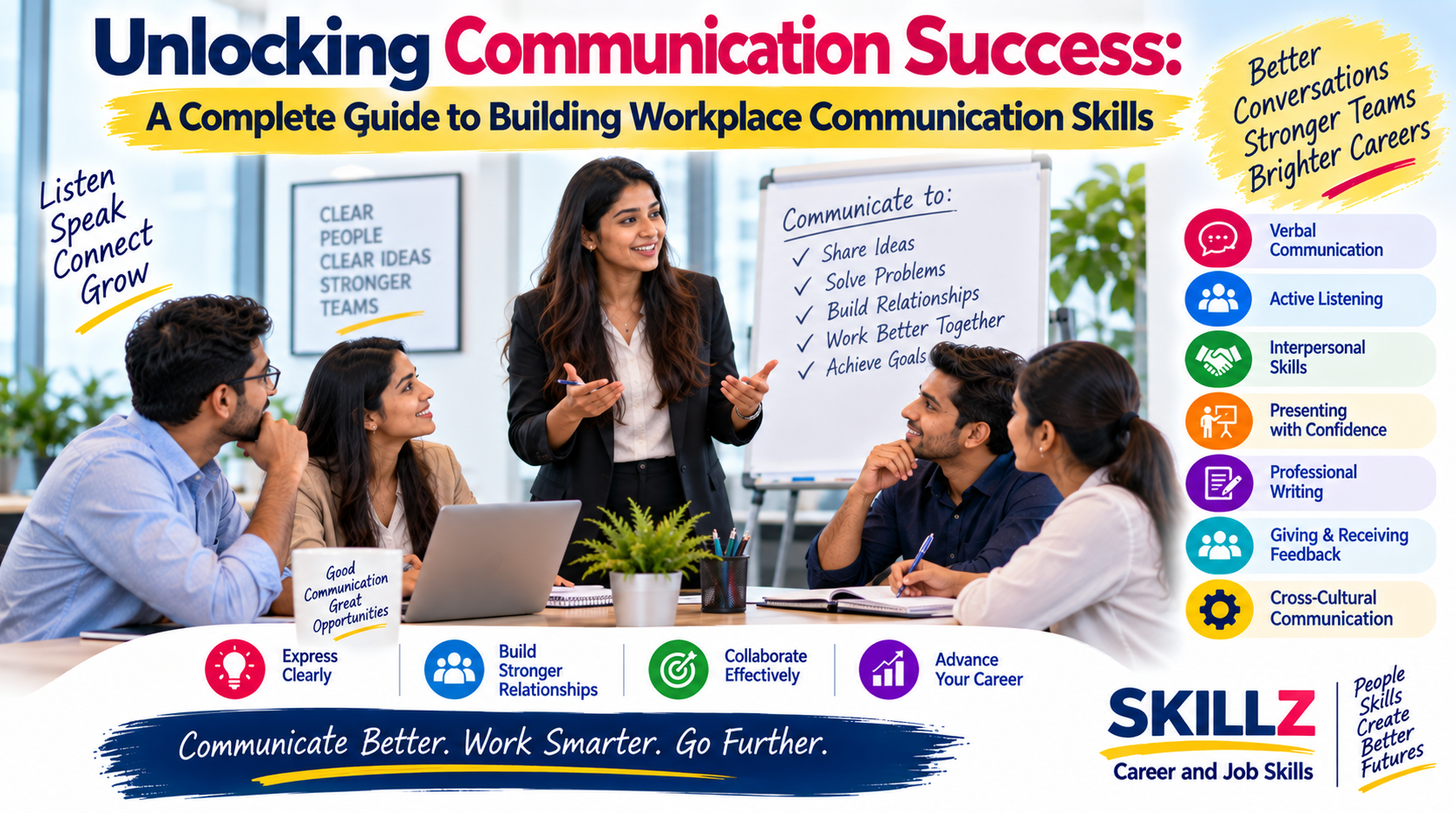
"The single biggest problem in communication is the illusion that it has taken place."
George Bernard Shaw
From reactive to proactive: a paradigm shift
Imagine a workplace where communication breakdowns are caught early, addressed systematically, and prevented from becoming career-limiting habits. That isn't a dream. It's achievable when we shift from a reactive model to a proactive model of communication skill-building.
Here's the harsh truth: professionals who are not confident communicators are at risk of missed opportunities, stalled promotions, and strained working relationships. Communication isn't just about talking. It's the foundation for every interview, every meeting, and every career milestone you'll meet.
The good news: early identification and targeted practice can turn hesitant communicators into confident, persuasive ones. This guide shows you how.
The critical importance of early communication skill-building
Research consistently shows that professionals who don't build strong communication habits early find it harder to close the gap as their responsibilities grow. The gap widens each year, and the effects cascade:
Career impact
Struggling in every interaction that needs clear communication, which is essentially all of them.
Confidence issues
Frustration shows up as avoiding meetings or presentations.
Relationship challenges
Avoiding networking situations and feeling "different" from confident peers.
Emotional toll
Low self-esteem, anxiety about interviews, and learned avoidance.
Long-term consequences
Slower promotions, limited leadership opportunities, and lifelong communication struggles.
Communication habits are most malleable early in a career. Support in the first few years of professional life is significantly more effective than support introduced later. Waiting to "figure it out naturally" is a gamble that rarely pays off.
Understanding communication gaps
What is a communication gap in the workplace?
A communication gap describes a professional with at least average competence in their role, who has specific difficulty in one or more communication areas:
- Verbal expression and structuring ideas
- Active listening
- Written communication
- Nonverbal communication and presence
- Assertiveness and feedback delivery
- Cross-cultural or cross-functional communication
Active listening deserves special mention: it's the strongest predictor of workplace communication success.
What communication gaps affect
A communication gap isn't just about interviews. It interferes with:
- Interview performance: structuring and delivering answers
- Meetings: contributing, clarifying, and following discussions
- Written communication: emails, reports, documentation
- Presentations: structuring and delivering information clearly
- Team collaboration: giving and receiving feedback
- Client and stakeholder relationships: building trust through clarity
Characteristics of hesitant communicators: red flags to watch for
Recognising communication struggles early is critical. Here is the hesitant communicator profile.
Over-reliance on filler and rambling
- Uses "um," "like," and long pauses excessively
- Struggles to get to the point
- Repeats themselves without adding new information
Low structural clarity
- Answers wander without a clear beginning, middle, and end
- Difficulty organising complex information
- Struggles to summarise key takeaways
Limited active listening
- Interrupts or misses key points in conversation
- Responds to what they expected to hear, not what was said
- Struggles to build on others' contributions in meetings
Avoidance behaviours
- "I hate presenting" or "meetings make me anxious"
- Physical symptoms before speaking situations, like a racing heart or dry mouth
- Volunteering for behind-the-scenes work to avoid speaking roles
What makes a communicator proficient? The five pillars
Active listening
The ability to fully absorb, process, and respond to what others are saying.
Why it matters: it's the best single predictor of successful workplace communication. If you can't listen well, you can't respond meaningfully.
Structural clarity
Knowing how to organise a message so it's easy to follow.
Why it matters: a message built on a framework like STAR or PREP is understood and remembered far better than a rambling one.
Fluency based on preparation
Speaking confidently without leaning heavily on notes.
Why it matters: smooth delivery frees up mental energy for connecting with the audience instead of searching for words.
Professional vocabulary
Comfortable use of industry-appropriate language and tone.
Why it matters: the right vocabulary signals competence and builds credibility quickly.
Nonverbal presence
Confident body language, eye contact, and tone of voice.
Why it matters: much of how a message lands depends on how it's delivered, not just what's said.
The proficient communicator advantage. With a solid foundation in these five pillars, proficient communicators have more mental capacity left to connect with their audience. They aren't struggling to find words. They're thinking about impact, building rapport, and engaging.
A framework for assessment and programme planning
The three-step progressive coaching model
Our approach is research-based and systematic, so no professional falls through the cracks.
Self-assessment and practice
Who's involved: the individual, a peer reviewer, and the manager as needed.
The process: collect feedback from recent presentations or interviews, analyse patterns in errors, and build a personal practice plan that targets specific gaps.
Structured coaching
Who's involved: a career coach, the manager, and peer mock-interview partners.
The process: review all the collected feedback, then create an Expanded Practice Plan with more intensity, or arrange a formal assessment if the gaps persist.
Formal assessment and programme planning
When earlier coaching hasn't fully closed the gap, a comprehensive assessment pinpoints what's going wrong and how to fix it. The result is a Personal Communication Plan (PCP) with clear, measurable goals.
With the right support, identified at the right time and delivered with the right intensity, virtually all professionals can become confident communicators.
The seven critical elements of communication coaching
Each element comes with strategies you can start practising this week.
Verbal expression: the foundation of everything
What it is: the ability to translate thoughts into clear spoken words.
The 3-sentence rule
Answer questions in exactly three sentences: the point, the evidence, the impact. It forces clarity and prevents rambling.
Record and review
Record yourself answering common interview or meeting questions, then note filler words, pacing, and clarity. Most professionals are surprised how much clearer they sound after three rounds.
Active listening: hearing beyond the words
What it is: fully engaging with what someone is saying rather than planning your reply while they speak.
The paraphrase check
Before responding in an important conversation, say "So what I'm hearing is..." This confirms understanding and shows engagement.
The two-question rule
In meetings, ask at least two clarifying questions before offering your opinion. It builds a habit of listening first.
Structural clarity: organising your message
What it is: organising information logically so listeners can follow easily.
The STAR framework
Situation, Task, Action, Result. Use it to structure interview answers and project updates alike.
The PREP framework
Point, Reason, Example, Point (restated). Useful for quick opinions in meetings or debates.
Professional vocabulary: speaking the language of your industry
What it is: comfortable, accurate use of the terminology in your field and role.
The vocabulary notebook
Keep a running list of industry terms and phrases you hear in meetings. Look them up, use them in a sentence, and practise them in your own updates.
Nonverbal presence: communicating beyond words
What it is: the body language, eye contact, tone, and posture that reinforce your message.
The mirror practice
Practise a two-minute answer in front of a mirror or camera, focusing only on posture and eye contact, not content.
Written communication: clarity on the page
What it is: writing emails, reports, and messages that are clear, concise, and professional.
The one-ask email
Every email should have one clear ask. If you have several requests, number them.
The subject line test
Your subject line should tell the reader what to expect and what action is needed.
Read it aloud before sending
This catches awkward phrasing, missing context, and tone problems before they reach your recipient.
Assertiveness and feedback: speaking up with confidence
What it is: expressing your needs, opinions, and boundaries respectfully and clearly.
The "I" statement framework
"I feel [emotion] when [situation] because [reason]. I would like [request]." This keeps feedback constructive rather than accusatory.
The feedback sandwich (use sparingly)
A positive observation, an area for improvement, then a positive close. Best for lower-stakes feedback. For significant issues, direct and specific feedback works better.
Bringing it all together: our communication packages
Everything above is proven communication coaching, organised into a complete, easy-to-implement programme.
What makes our packages different
- Based on the 3-step framework. Our packages follow the exact assessment and coaching framework in this guide.
- Covers all critical elements. Every package includes targeted instruction in verbal expression, active listening, structural clarity, professional vocabulary, nonverbal presence, written communication, and assertiveness.
- Evidence-based strategies. Every activity is grounded in research on what works for building workplace communication confidence.
- Explicit and systematic coaching. Clear step-by-step sessions, direct practice, guided feedback, and independent application.
Package components: Communication Skills Package
Level 1: Foundation
Early career
- Verbal expression basics (12 weeks)
- Active listening fundamentals
- Basic email etiquette
- Simple structuring frameworks (STAR, PREP)
Level 2: Building skills
Mid career
- Advanced structuring for presentations
- Assertiveness and feedback delivery
- Cross-functional communication
- Written communication for leadership
Level 3: Mastery
Senior and leadership
- Executive presence and public speaking
- Persuasive and influence communication
- Difficult conversation navigation
- Media and stakeholder communication
Real results from real professionals
Case study 1: Arjun
- Starting point
- Rambling interview answers, high anxiety, and multiple rejections despite strong technical skills.
- Intervention
- Communication Skills Package Level 1, 30 minutes of daily practice, with a focus on the STAR framework and recorded practice.
- Results after 6 weeks
- Mastered structured answers, reduced filler words by 70%, and received two job offers.
Case study 2: Priya
- Starting point
- Avoided speaking up in leadership meetings despite having strong ideas.
- Intervention
- Level 2 package, with a focus on assertiveness and the two-question rule.
- Results after 8 weeks
- Now contributes regularly in meetings and was asked to lead a cross-functional initiative.
Investment in your communication future
Frequently asked questions
How do I know which level is right for me?
Each package includes a free initial assessment that determines your current communication level and identifies specific areas of need.
How much time does this require daily?
The minimum effective dose is 15–30 minutes daily, 5 days per week.
Will this help with interview anxiety specifically?
Yes. Our packages are designed around research on effective interventions for interview and presentation anxiety.
Final thoughts: the communication gift that keeps giving
Every professional deserves to communicate with confidence: the freedom to speak up in any meeting, the confidence to tackle any interview, and the ability to build genuine connections at work.
With the right coaching, delivered consistently with patience and practice, hesitant communicators become confident, capable professionals.
The research is clear. The methods work. The results are real.